



Digital Transformation for SMEs: Step-by-Step Guide

Digital Transformation for SMEs: Step-by-Step Guide Digital Transformation for SMEs: Step-by-Step Guide Digital transformation is no longer only for large enterprises. Small and medium-sized businesses (SMEs) are increasingly using digital technologies, automation, AI, cloud platforms and data analytics to improve efficiency, customer experience and business growth. But digital transformation does not mean simply buying new software. It means changing the way a business operates using technology, data and smarter processes. For SMEs, the right transformation strategy can help reduce manual work, improve customer management, increase operational efficiency and create a stronger foundation for scalable growth. What Is Digital Transformation? Digital transformation is the process of using digital technology to improve business processes, customer experiences, decision-making and overall operations. It can involve: Website and digital presence CRM systems ERP solutions Cloud technology AI and automation WhatsApp automation Digital payments Business analytics Inventory management Customer support systems Cybersecurity Custom software The objective is not to implement technology for the sake of technology. The objective is to solve real business problems and create measurable business value. Why Digital Transformation Matters for SMEs Many SMEs still depend heavily on spreadsheets, manual communication, disconnected software and paper-based processes. This can create problems such as: Lost leads Delayed customer responses Manual data entry Poor follow-up Inventory errors Lack of real-time reporting Duplicate work Difficult decision-making Dependency on individual employees Digital transformation can connect these processes and create a more structured operating environment. Step-by-Step Digital Transformation Roadmap for SMEs Step 1 — Assess Your Current Business Before purchasing any software, understand your current situation. Review: Business processes Sales Marketing Customer management Finance Inventory Operations Employee workflows Technology Data Identify where your business is losing time, money or opportunities. Start with assessment, not software. Step 2 — Identify Your Biggest Business Problems Create a list of your most important operational challenges. For example: Problem: Leads are coming through WhatsApp but aren’t being followed up. Possible solution: CRM + WhatsApp automation. Problem: Inventory is updated manually. Possible solution: Integrated inventory management. Problem: Management cannot see real-time sales performance. Possible solution: Business intelligence dashboard. This approach prevents unnecessary technology spending. Step 3 — Define Your Digital Transformation Goals Set measurable objectives. For example: Reduce manual work by 30% Improve lead response time Centralize customer information Automate repetitive tasks Improve inventory visibility Increase sales follow-up Create real-time dashboards Improve customer experience Your technology strategy should support these goals. Step 4 — Build Your Digital Foundation An SME should establish the right digital foundation before implementing advanced technologies. This may include: Professional website Business email CRM Cloud storage Digital payments Analytics Cybersecurity Communication tools A strong foundation makes future automation easier. Step 5 — Implement CRM CRM is often one of the most valuable starting points for an SME. A CRM can help manage: Leads Customers Sales pipeline Follow-ups Quotations Communication Sales activities Customer history Instead of keeping customer information across spreadsheets, WhatsApp conversations and notebooks, the business can create a centralized customer system. Step 6 — Automate Repetitive Processes Once the basic systems are in place, identify repetitive activities. Examples include: Lead received → CRM entry → Salesperson assigned → Follow-up reminder → Customer message → Sales update Other automation opportunities include: WhatsApp notifications Email campaigns Invoice generation Payment reminders Customer onboarding Internal approvals Task assignments Reports Automation should focus on repetitive, high-volume and measurable processes. Step 7 — Introduce AI Where It Adds Value AI can become the next layer of SME transformation. Potential applications include: AI customer support AI chatbots Lead qualification Content generation Document processing Sales insights Business analytics Predictive forecasting AI-powered workflow automation However, SMEs should avoid implementing AI simply because it is trending. Use AI where it solves a specific business problem. Step 8 — Connect Your Business Systems Disconnected software can create another layer of complexity. The goal should be to connect important systems wherever practical. For example: Website → CRM → WhatsApp → Sales → Billing → Inventory → Analytics This creates a connected digital ecosystem and reduces duplicate data entry. Step 9 — Use Data for Decision-Making Digital transformation should eventually provide management with better visibility. Useful dashboards can track: Revenue Leads Conversion rate Sales performance Customer acquisition Inventory Expenses Marketing performance Customer support Operational efficiency Instead of asking, “What happened?”, management should be able to understand “Why did it happen and what should we do next?” Step 10 — Train Your Team Technology implementation alone does not create transformation. Employees need to understand: Why the system is being introduced How to use it What processes are changing What information they need to maintain How their performance will improve Training and adoption are critical parts of digital transformation. Step 11 — Measure Results After implementation, compare the results with your original baseline. Measure: Time saved Cost reduction Lead response time Conversion rate Productivity Customer satisfaction Revenue Operational efficiency Digital transformation should be treated as a continuous improvement process. Common Digital Transformation Mistakes SMEs Should Avoid 1. Buying Software Without an Assessment Technology should solve a business problem. 2. Trying to Transform Everything at Once Start with high-impact areas and scale gradually. 3. Ignoring Employees Technology adoption depends on people. 4. Using Too Many Disconnected Tools More software does not necessarily mean better operations. 5. Focusing Only on Technology Transformation should connect business strategy, processes, people, technology and data. 6. Not Measuring ROI Define success metrics before implementation. How Much Does Digital Transformation Cost for an SME? There is no universal price. The investment depends on: Business size Number of users Number of processes Software requirements Integrations Custom development AI requirements Data migration Training Support A small transformation project can begin with a focused scope, while a complete business transformation involving multiple departments and systems can require a much larger investment. The best approach is to assess first and build a prioritized roadmap. Jisoteix Approach to SME Digital Transformation Jisoteix Technologies LLP helps businesses approach digital transformation through a combination of strategy, technology, AI, automation and consulting. Its current offering covers areas including
Top Supply Chain Trends Every Business Should Know in 2026
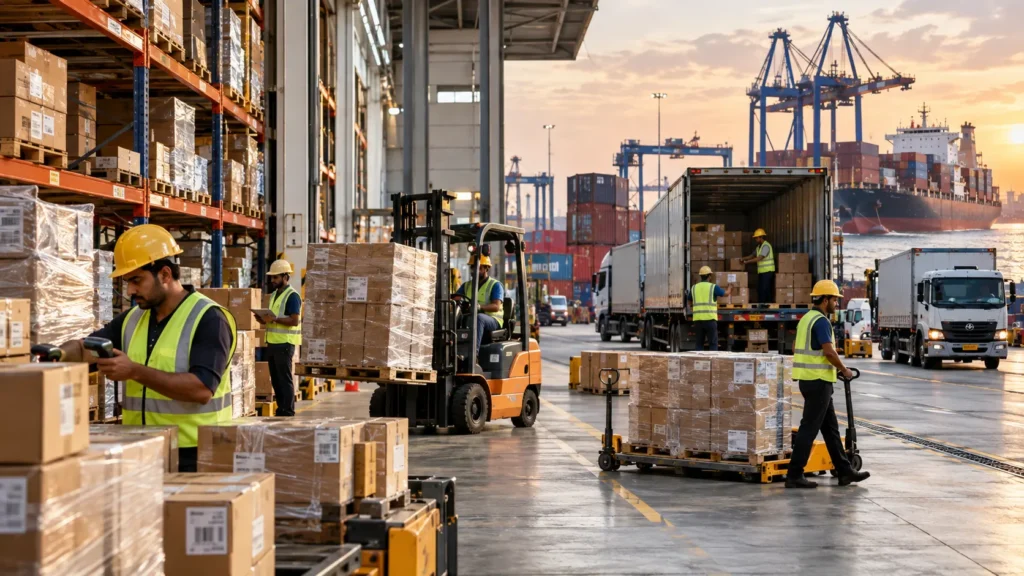
Top Supply Chain Trends Every Business Should Know in 2026 Top Supply Chain Trends Every Business Should Know in 2026 The global supply chain landscape is undergoing a major transformation. Rising customer expectations, market uncertainty, and rapid technological advancements are pushing businesses to rethink how they manage procurement, inventory, logistics, and operations. In 2026, successful organizations are adopting intelligent, connected, and data-driven supply chains to improve efficiency, reduce costs, and build long-term resilience. Whether you’re a manufacturer, healthcare provider, retailer, eCommerce business, or logistics company, staying ahead of these trends is essential for sustainable growth. Top Supply Chain Trends in 2026 1. AI-Driven Demand Forecasting Artificial Intelligence helps businesses accurately predict customer demand, reduce excess inventory, and improve production planning. 2. End-to-End Supply Chain Visibility Real-time monitoring of suppliers, warehouses, shipments, and inventory enables faster decision-making and minimizes operational disruptions. 3. Intelligent Inventory Management Smart inventory systems use data analytics to optimize stock levels, reduce carrying costs, and prevent stock shortages. 4. Warehouse Automation Automation technologies, robotics, barcode systems, and smart warehouse solutions improve operational efficiency and order accuracy. 5. Cloud-Based Supply Chain Platforms Cloud solutions allow teams, suppliers, and partners to collaborate securely from anywhere while ensuring data accessibility and scalability. 6. Predictive Analytics Businesses use advanced analytics to identify risks, anticipate supply disruptions, and improve strategic planning before problems occur. 7. Sustainable Supply Chains Organizations are increasingly focusing on environmentally responsible sourcing, waste reduction, carbon footprint monitoring, and ESG compliance. 8. Digital Procurement Modern procurement platforms streamline supplier management, automate approvals, and improve purchasing transparency. 9. Logistics Optimization Route optimization, shipment tracking, and transportation analytics help reduce delivery costs and improve customer satisfaction. 10. Supply Chain Cybersecurity As digital adoption increases, protecting operational systems and sensitive supply chain data has become a critical business priority. Benefits of Modern Supply Chain Management Improve operational efficiency Reduce inventory and logistics costs Increase supply chain visibility Enhance customer satisfaction Make faster business decisions Improve supplier collaboration Minimize business risks Support sustainable business growth Enable scalable digital transformation How Jisoteix Helps At Jisoteix Technologies LLP, we help organizations modernize their supply chain operations through digital transformation, intelligent automation, and AI-powered business solutions. Our goal is to simplify complex processes, improve operational visibility, and create scalable systems that drive measurable business outcomes. Our Supply Chain Solutions Supply Chain Digital Transformation – Modernize legacy processes with cloud-based technologies. Business Process Automation – Automate repetitive workflows to improve productivity and reduce manual effort. AI & Data Analytics – Transform operational data into actionable business insights through intelligent dashboards and predictive analytics. Inventory & Warehouse Solutions – Implement digital inventory management, warehouse optimization, and real-time stock visibility. ERP & CRM Integration – Connect business systems to create a unified operational ecosystem. Cloud Solutions – Deploy secure, scalable cloud infrastructure for better collaboration and accessibility. Custom Business Applications – Develop tailored web and mobile solutions to support procurement, logistics, inventory, and supply chain operations. Business Intelligence Dashboards – Monitor KPIs, inventory performance, supplier metrics, and operational efficiency in real time. Digital Consulting – Assess existing processes and design technology roadmaps aligned with your business goals. Why Choose Jisoteix? AI-Driven Business Solutions Industry-Focused Digital Transformation Scalable Cloud & Enterprise Solutions Process Automation Expertise Data-Driven Decision Support Secure & Future-Ready Technology Customized Solutions for Manufacturing, Healthcare, Retail, Logistics, and eCommerce Ready to Transform Your Supply Chain? A modern supply chain is no longer just about moving products—it’s about creating a connected, intelligent, and resilient business ecosystem. Jisoteix helps organizations adopt the right technologies to improve efficiency, reduce costs, and accelerate digital growth. Explore our digital transformation solutions at: www.jisoteix.com
AI-Powered Smart Manufacturing
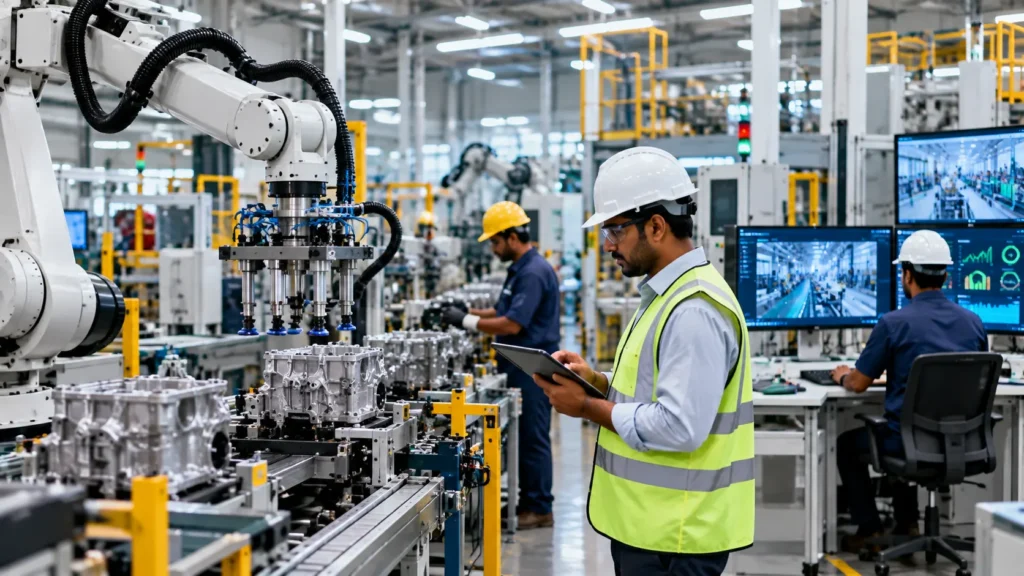
AI-Powered Smart Manufacturing Modern manufacturing is evolving rapidly. Rising production costs, increasing quality expectations, supply chain challenges, and growing customer demand require manufacturers to adopt intelligent digital solutions. AI-powered smart manufacturing enables businesses to improve efficiency, reduce operational costs, enhance product quality, and make faster, data-driven decisions. What is AI-Powered Smart Manufacturing? AI-Powered Smart Manufacturing combines Artificial Intelligence (AI), Industrial IoT (IIoT), automation, cloud technologies, advanced analytics, and real-time monitoring to optimize manufacturing operations. Instead of relying only on manual processes, manufacturers gain intelligent insights that help improve production performance, reduce downtime, and increase overall productivity. Manufacturing Challenges Many manufacturing businesses face common operational challenges, including: Unplanned machine downtime Manual and repetitive processes Inconsistent product quality High production costs Inventory management issues Delayed production planning Limited visibility into factory operations Supply chain inefficiencies High energy consumption Difficulty making data-driven decisions How Jisoteix Helps Manufacturing Businesses Jisoteix Technologies LLP provides AI-driven digital transformation solutions designed to help manufacturers modernize their operations and improve business performance. AI Strategy & Digital Transformation We assess existing manufacturing processes and develop practical AI and automation roadmaps that align with business goals. Smart Factory Solutions Connect machines, production lines, and operational data to create intelligent manufacturing environments with real-time visibility. Manufacturing Process Automation Automate repetitive workflows to improve operational efficiency, minimize manual effort, and reduce human errors. AI-Based Production Planning Use intelligent analytics to improve production scheduling, optimize resource utilization, and increase manufacturing output. Predictive Maintenance Monitor equipment performance continuously to identify potential failures before they occur, reducing unexpected downtime and maintenance costs. Quality Inspection with AI Implement AI-powered visual inspection systems that help identify defects, maintain quality standards, and reduce product rework. Industrial Data Analytics Convert manufacturing data into actionable insights through dashboards, reports, and performance monitoring. Inventory & Warehouse Optimization Improve inventory accuracy, automate stock monitoring, and optimize warehouse operations for better material availability. Supply Chain Visibility Strengthen supplier coordination and logistics planning through digital workflows and real-time operational insights. Business Intelligence Dashboards Monitor production, efficiency, quality, maintenance, inventory, and operational KPIs from a centralized dashboard. Cloud & Digital Infrastructure Build secure, scalable digital environments that support manufacturing growth and business continuity. Sustainability & Operational Efficiency Improve resource utilization, reduce waste, optimize energy consumption, and support long-term sustainable manufacturing initiatives. Benefits of AI-Powered Smart Manufacturing Businesses can achieve measurable improvements such as: Increased production efficiency Reduced operational costs Lower machine downtime Improved product quality Faster business decision-making Higher workforce productivity Better inventory control Enhanced supply chain coordination Improved customer satisfaction Scalable digital operations Better operational visibility Sustainable business growth Industries We Support Our solutions can be customized for a wide range of manufacturing sectors, including: Automotive Engineering Industrial Equipment Electronics Pharmaceuticals Medical Devices Food & Beverage Textiles Chemicals Packaging Plastic Manufacturing Metal Fabrication Consumer Goods Renewable Energy Components Why Choose Jisoteix Technologies LLP? Jisoteix Technologies LLP focuses on practical, scalable, and business-oriented AI solutions that help manufacturers improve operational performance through digital transformation, automation, and intelligent technologies. Our approach emphasizes long-term value, measurable outcomes, and solutions tailored to each organization’s unique operational requirements. Whether your organization is beginning its digital transformation journey or expanding existing smart manufacturing initiatives, our team works to deliver technology solutions that support productivity, efficiency, and sustainable growth. Get Started Transform your manufacturing operations with AI-powered smart manufacturing solutions from Jisoteix Technologies LLP. Discover how intelligent automation, real-time insights, and digital technologies can help improve efficiency, reduce costs, and prepare your business for the future of manufacturing. Website: www.jisoteix.com
How AI is Revolutionizing Supply Chain Management
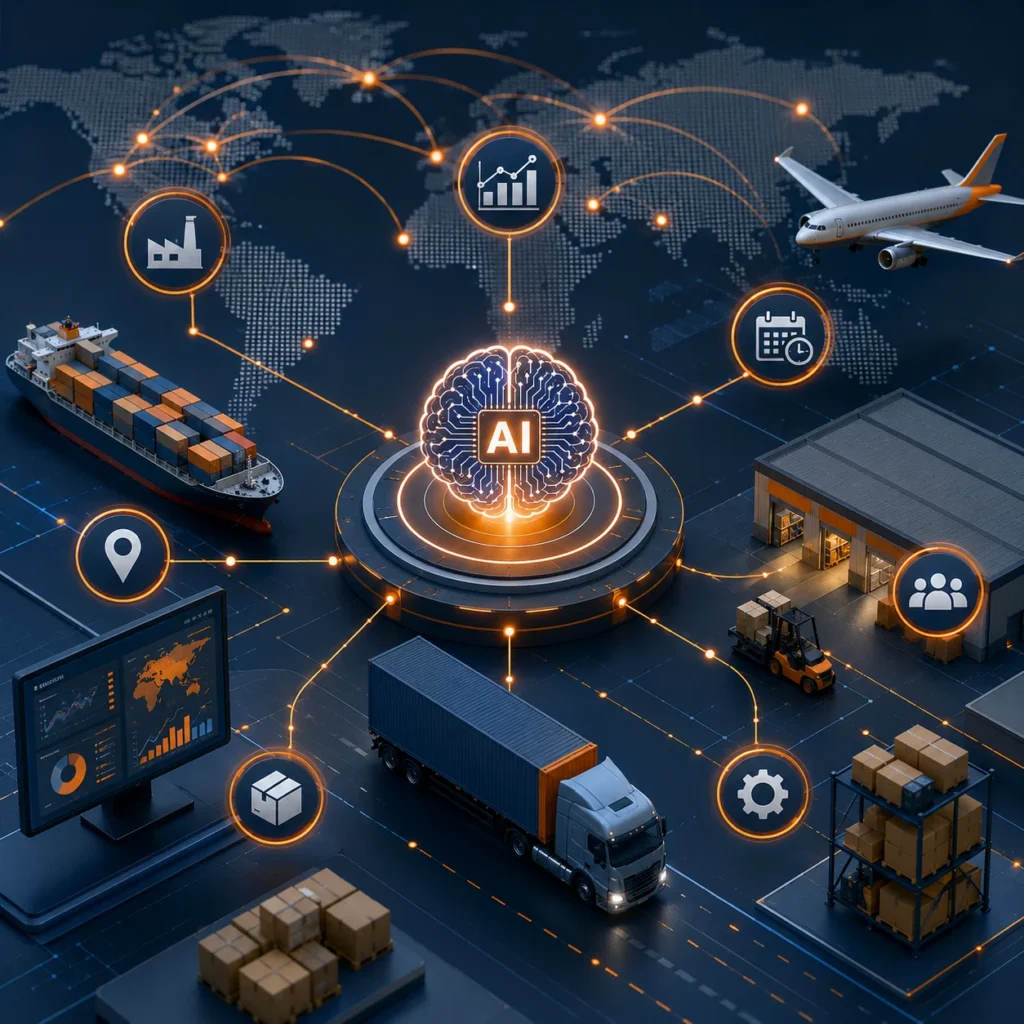
How AI is Revolutionizing Supply Chain Management How AI is Revolutionizing Supply Chain Management Introduction Artificial Intelligence (AI) is transforming supply chain management by helping businesses make faster decisions, reduce costs, improve efficiency, and build more resilient operations. As global supply chains become increasingly complex, organizations are turning to AI-powered technologies to predict demand, optimize inventory, automate routine processes, and improve visibility across the entire supply chain. From manufacturers and retailers to logistics providers and distributors, businesses are using AI to streamline operations, minimize risks, and deliver better customer experiences. In today’s competitive market, AI is no longer just an innovation—it’s becoming a strategic advantage for organizations seeking smarter and more sustainable supply chains. What is AI in Supply Chain Management? AI in supply chain management refers to the use of intelligent technologies such as machine learning, predictive analytics, computer vision, and automation to improve planning, sourcing, production, warehousing, transportation, and delivery. By analyzing large volumes of real-time and historical data, AI helps businesses identify patterns, forecast demand, optimize operations, and make data-driven decisions with greater speed and accuracy. Benefits of AI in Supply Chain Management 1. Accurate Demand Forecasting AI analyzes sales trends, customer behavior, seasonal demand, and market data to predict future demand more accurately. Better forecasting helps businesses maintain the right inventory levels, reduce stock shortages, and avoid overstocking. 2. Smarter Inventory Management AI continuously monitors inventory across warehouses and distribution centers, recommending optimal stock levels and improving inventory turnover. This reduces carrying costs while ensuring products are available when customers need them. 3. Intelligent Warehouse Automation Modern warehouses use AI-powered robots, smart sensors, and automated systems to speed up picking, packing, sorting, and inventory tracking. Automation improves productivity, reduces manual errors, and shortens order fulfillment times. 4. Predictive Maintenance AI monitors equipment performance and identifies potential failures before they occur. Predictive maintenance reduces unexpected downtime, lowers repair costs, and improves operational reliability. 5. Optimized Transportation and Logistics AI helps businesses plan efficient delivery routes, monitor fleet performance, and respond quickly to traffic, weather, or supply disruptions. This leads to faster deliveries, lower fuel consumption, and improved customer satisfaction. 6. Better Risk Management Supply chains face risks such as supplier delays, natural disasters, geopolitical events, and changing market conditions. AI analyzes multiple data sources to identify risks early and recommend proactive solutions, helping organizations build more resilient supply chains. Real-World Applications of AI Businesses across industries are using AI to transform their supply chain operations. Demand forecasting and sales prediction Supplier performance evaluation Procurement optimization Warehouse automation Inventory optimization Route and fleet planning Quality inspection using computer vision Customer service through AI-powered chatbots Supply chain risk monitoring Sustainability and carbon emission tracking These applications enable organizations to improve efficiency while reducing operational costs and environmental impact. Challenges of AI Adoption Although AI offers significant benefits, businesses should also address key implementation challenges. Data Quality AI performs best when it is trained on accurate, complete, and reliable data. Poor-quality data can reduce prediction accuracy and operational effectiveness. Integration with Existing Systems Many organizations still use legacy ERP and warehouse management systems. Integrating AI with existing infrastructure requires careful planning and investment. Workforce Skills Employees need training to effectively work alongside AI-powered tools. Successful implementation depends on technology adoption and continuous learning. Cybersecurity As supply chains become more connected, protecting sensitive business and supplier data through strong cybersecurity practices becomes increasingly important. Future Trends in AI-Powered Supply Chains The future of supply chain management will be driven by intelligent technologies that improve agility, sustainability, and decision-making. Generative AI for Supply Chain Planning Generative AI is helping organizations create reports, summarize supplier insights, support procurement decisions, and improve operational planning. Autonomous Supply Chains AI, robotics, and IoT technologies are enabling supply chains that can automatically monitor inventory, respond to disruptions, and optimize workflows with minimal human intervention. Sustainable Supply Chains AI supports sustainability by reducing waste, optimizing transportation routes, improving energy efficiency, and tracking carbon emissions across supply chain operations. Digital Twins Digital twin technology creates virtual models of supply chains, allowing businesses to simulate scenarios, identify bottlenecks, and improve planning before implementing changes. How Jisoteix Green Helps At Jisoteix Green, we help organizations build intelligent and sustainable supply chains through innovative technology and strategic consulting. Our expertise includes: Sustainable Supply Chain Consulting AI-Driven Business Solutions Supplier Network Development Sustainable Procurement ESG & Sustainability Consulting Circular Economy & Asset Management Eco-Friendly Packaging Solutions Digital Transformation Services We help businesses improve operational efficiency, strengthen supplier collaboration, reduce environmental impact, and build future-ready supply chains. Conclusion Artificial Intelligence is revolutionizing supply chain management by improving forecasting, automating operations, optimizing logistics, and strengthening business resilience. Organizations that embrace AI can make smarter decisions, reduce costs, enhance customer satisfaction, and achieve their sustainability goals. As AI continues to evolve, businesses that invest in intelligent supply chain solutions today will be better prepared to compete in an increasingly digital and sustainable future. Frequently Asked Questions (FAQs) What is AI in supply chain management? AI in supply chain management uses technologies such as machine learning and predictive analytics to improve forecasting, inventory management, logistics, procurement, and decision-making. What are the benefits of AI in supply chains? AI helps businesses improve efficiency, reduce costs, optimize inventory, enhance forecasting, automate operations, manage risks, and support sustainability initiatives. Can AI improve supply chain sustainability? Yes. AI helps reduce waste, optimize transportation routes, improve energy efficiency, monitor emissions, and support responsible sourcing, contributing to more sustainable supply chain operations. Which industries benefit from AI-powered supply chains? AI is widely used in manufacturing, retail, eCommerce, healthcare, logistics, automotive, pharmaceuticals, food and beverage, and consumer goods industries.
Sustainability in Business: Benefits, Strategies & Future Trends (2026)

Sustainability in Business: Benefits, Strategies & Future Trends (2026) Sustainability is no longer just a corporate responsibility—it’s a business strategy that drives long-term growth, resilience, and innovation. In 2026, organizations across industries are embracing sustainable practices to reduce environmental impact, improve operational efficiency, meet regulatory expectations, and build stronger relationships with customers and stakeholders. From adopting renewable energy and eco-friendly packaging to implementing ESG frameworks and circular economy models, businesses are integrating sustainability into every aspect of their operations. Companies that prioritize sustainable development are better positioned to reduce costs, strengthen their brand reputation, and remain competitive in a rapidly evolving global market. What is Business Sustainability? Business sustainability is the practice of operating in a way that balances economic growth, environmental responsibility, and social well-being. It focuses on creating long-term value while minimizing the impact of business activities on natural resources and communities. A sustainable business aims to: Reduce carbon emissions Use resources efficiently Minimize waste Support ethical sourcing Promote employee well-being Build transparent governance practices Contribute to long-term environmental and social goals Rather than viewing sustainability as a compliance requirement, leading organizations treat it as a driver of innovation and competitive advantage. Benefits of Sustainability in Business 1. Enhanced Brand Reputation Consumers and business partners increasingly prefer organizations that demonstrate genuine environmental and social responsibility. Sustainable practices help build trust, strengthen brand loyalty, and differentiate businesses in competitive markets. 2. Cost Savings Through Resource Efficiency Reducing energy consumption, optimizing water use, minimizing waste, and improving operational efficiency can lower long-term operating costs while supporting environmental goals. 3. Stronger ESG Performance Environmental, Social, and Governance (ESG) initiatives help organizations improve transparency, strengthen governance, and meet the expectations of investors, customers, and regulatory bodies. 4. Better Risk Management Sustainability strategies help businesses prepare for climate-related risks, supply chain disruptions, changing regulations, and evolving market expectations. 5. Increased Business Opportunities Many organizations and government agencies now prioritize suppliers with strong sustainability credentials, creating new opportunities for growth and long-term partnerships. Key Strategies for Building a Sustainable Business Adopt ESG Practices Develop measurable ESG goals, monitor progress, and publish transparent sustainability reports to demonstrate accountability and continuous improvement. Improve Resource Efficiency Reduce energy consumption, conserve water, optimize raw material usage, and invest in energy-efficient technologies to improve operational performance. Implement Circular Economy Principles Design products and processes that encourage reuse, recycling, refurbishment, and waste reduction, helping extend product life cycles and reduce environmental impact. Choose Sustainable Procurement Work with suppliers who follow ethical, environmentally responsible, and socially conscious practices to build a resilient and sustainable supply chain. Invest in Green Technologies Leverage digital solutions such as AI, IoT, cloud platforms, and data analytics to monitor sustainability performance, improve efficiency, and support informed decision-making. Future Trends in Business Sustainability (2026) AI for Sustainability Artificial Intelligence is helping organizations optimize energy use, predict maintenance needs, monitor emissions, and improve sustainability reporting through data-driven insights. Circular Economy Adoption Businesses are shifting from traditional linear models to circular systems that prioritize reuse, recycling, and responsible resource management. Sustainable Supply Chains Organizations are increasing transparency and collaboration across their supply chains to reduce environmental impact and ensure responsible sourcing. Eco-Friendly Packaging Companies are replacing single-use plastics with recyclable, biodegradable, and reusable packaging solutions to meet customer expectations and regulatory requirements. Carbon Reduction and Net Zero Businesses are investing in renewable energy, energy-efficient operations, and carbon management initiatives to support long-term net-zero goals. How Jisoteix Green Helps Businesses At Jisoteix Green, we help organizations accelerate their sustainability journey through innovative consulting and technology-driven solutions. Our expertise includes: ESG & Sustainability Consulting Eco-Friendly Procurement & Packaging Circular Economy & Asset Management Supplier Network Development Sustainability Strategy & Compliance Digital Solutions for Sustainable Operations We partner with businesses to build practical, measurable, and future-ready sustainability strategies that deliver long-term value. Conclusion Sustainability has become a strategic priority for organizations seeking long-term growth, resilience, and competitive advantage. By integrating responsible environmental, social, and governance practices into daily operations, businesses can reduce costs, improve efficiency, strengthen stakeholder trust, and create lasting positive impact. As sustainability continues to shape the future of global business, organizations that invest in innovation, responsible resource management, and digital transformation will be well positioned to thrive in 2026 and beyond. Frequently Asked Questions (FAQs) What is business sustainability? Business sustainability is the practice of balancing economic success with environmental responsibility and social impact to create long-term value. Why is sustainability important for businesses? It helps reduce operational costs, strengthen brand reputation, improve ESG performance, manage risks, and support long-term business growth. What are the key pillars of sustainability? The three core pillars are Environmental, Social, and Governance (ESG), often supported by sustainable economic growth. How can businesses become more sustainable? Organizations can adopt ESG frameworks, improve energy efficiency, reduce waste, implement circular economy practices, source responsibly, and use digital technologies to monitor and improve sustainability performance.
What Is Generative AI? Everything You Need to Know (2026 Guide)
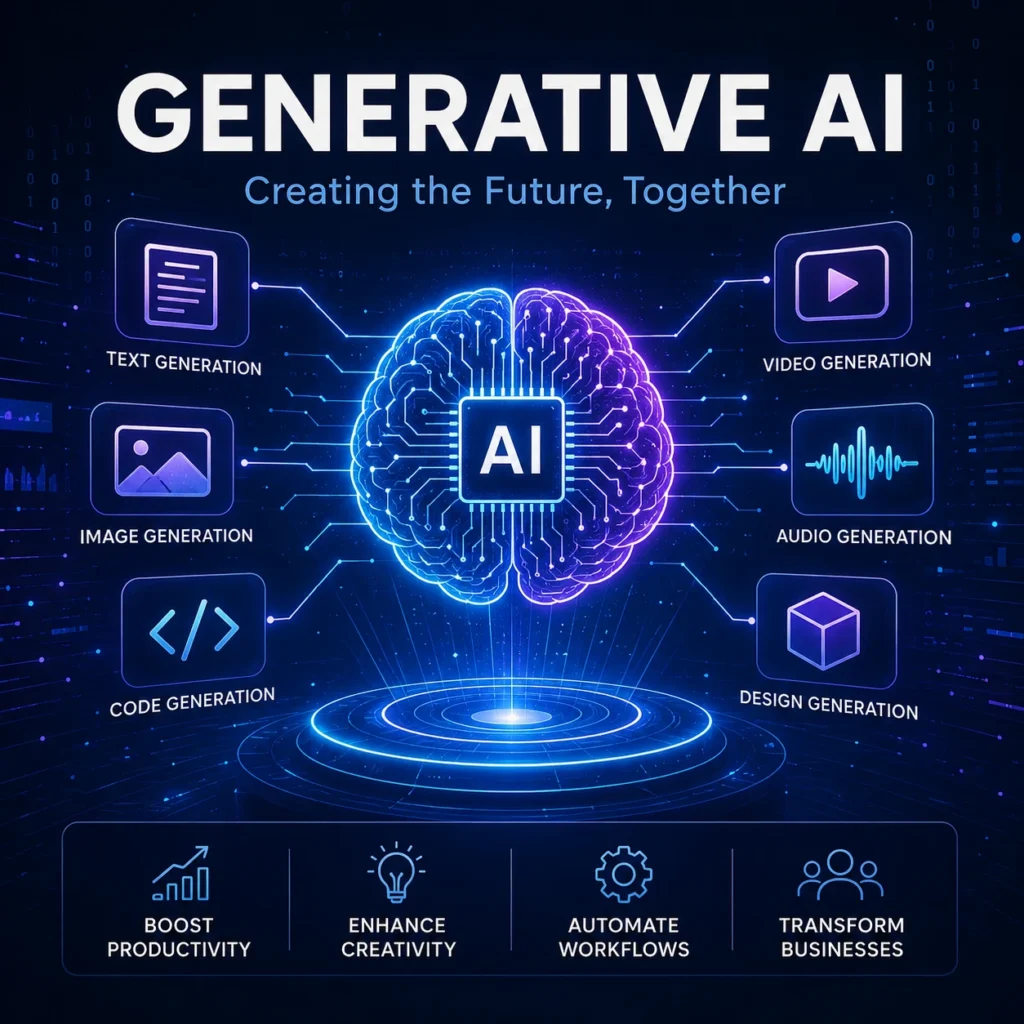
What Is Generative AI? Everything You Need to Know (2026 Guide) Introduction Artificial Intelligence (AI) is reshaping how businesses operate, innovate, and serve customers. Among the most transformative advancements in AI is Generative AI—a technology capable of creating entirely new content, including text, images, videos, code, music, and even product designs. Generative AI is no longer a futuristic concept. It is actively transforming industries such as healthcare, finance, manufacturing, retail, education, and marketing. Businesses using Generative AI are improving productivity, reducing operational costs, accelerating innovation, and enhancing customer experiences. In this guide, we explain what Generative AI is, how it works, its benefits, challenges, and why it matters for businesses in 2026. What Is Generative AI? Generative AI refers to a category of artificial intelligence models designed to generate new content based on patterns learned from massive datasets. Unlike traditional AI systems that analyze or classify existing data, Generative AI can create original outputs. Examples include: Writing articles, reports, and emails Generating realistic images and graphics Creating videos and animations Producing software code Designing products or prototypes Generating voice, music, and audio content Popular examples include tools developed by OpenAI, Google AI, Microsoft AI, and Anthropic. How Does Generative AI Work? Generative AI models are trained on enormous volumes of data such as: Text documents Images Audio recordings Videos Code repositories Structured business data These models learn patterns, relationships, context, and probabilities between data points. When a user provides a prompt such as: “Create a marketing campaign for a wellness brand” The AI predicts the most relevant output based on its training and generates content accordingly. Key technologies powering Generative AI include: 1. Large Language Models (LLMs) LLMs are trained on massive text datasets to generate human-like text. They power: Chatbots Virtual assistants Knowledge systems Content generation platforms 2. Neural Networks Neural networks mimic how the human brain processes information and identifies patterns. 3. Transformers Transformers enable AI to understand context, meaning, and long-range relationships in data. This breakthrough significantly improved language and content generation. Types of Generative AI Text Generation Used for: Blogs Reports Product descriptions Emails Customer support replies Image Generation AI can create: Product visuals Social media graphics Marketing creatives Interior concepts Brand designs Video Generation AI can generate: Explainer videos Advertisements Training videos Presentations Audio Generation Used for: Voice assistants AI voiceovers Music creation Podcast automation Code Generation Developers use AI to: Write code Debug software Generate scripts Speed up development Benefits of Generative AI Increased Productivity Teams can automate repetitive tasks and focus on strategic work. Faster Decision-Making AI helps analyze large datasets quickly and provide insights. Reduced Costs Automation lowers operational expenses. Better Customer Experience AI chatbots offer instant and personalized support. Faster Innovation Businesses can prototype ideas rapidly. Real-World Business Applications Generative AI is transforming nearly every industry. Healthcare Applications include: Medical documentation Drug discovery Diagnostic support Patient communication Relevant field: Healthcare Informatics Retail & E-commerce AI helps with: Personalized recommendations Product descriptions Inventory forecasting Customer support Finance Use cases include: Fraud detection Risk assessment Financial reporting Customer service automation Manufacturing AI supports: Predictive maintenance Product design Supply chain optimization Quality control Marketing Generative AI improves: Ad copy creation Campaign planning SEO content generation Graphic design Challenges of Generative AI Despite its benefits, Generative AI comes with challenges. Data Privacy Risks Sensitive data must be handled securely. Accuracy Issues AI can occasionally generate incorrect information. Bias AI models may reflect biases present in training data. Compliance Businesses must follow regulatory and ethical guidelines. Security AI systems must be protected against misuse. Generative AI vs Traditional AI Feature Traditional AI Generative AI Purpose Analyze data Create new content Output Predictions Text, images, videos Use Case Detection, automation Creation, innovation Flexibility Limited High Why Generative AI Matters in 2026 In 2026, Generative AI is becoming a major competitive advantage. Organizations adopting AI early are: Operating faster Scaling smarter Innovating continuously Delivering superior customer experiences Businesses that ignore AI risk falling behind competitors. Generative AI is no longer optional for future-focused companies. How Jisoteix Helps Businesses with AI At Jisoteix Technologies LLP, we help organizations implement AI-driven solutions that improve efficiency, automation, and decision-making. Our AI capabilities include: AI chatbot development Business workflow automation AI-powered analytics Custom AI solutions Digital transformation consulting We help businesses turn AI from a concept into measurable growth. Final Thoughts Generative AI is revolutionizing the way businesses create, operate, and compete. From content generation and automation to product innovation and customer engagement, the impact of Generative AI is massive and growing rapidly. Companies that strategically adopt AI today will be better positioned for long-term success in tomorrow’s digital economy. The future of business is increasingly AI-powered—and Generative AI is leading that transformation.
AI in Healthcare: Benefits, Applications, Challenges & Future Trends (2026)
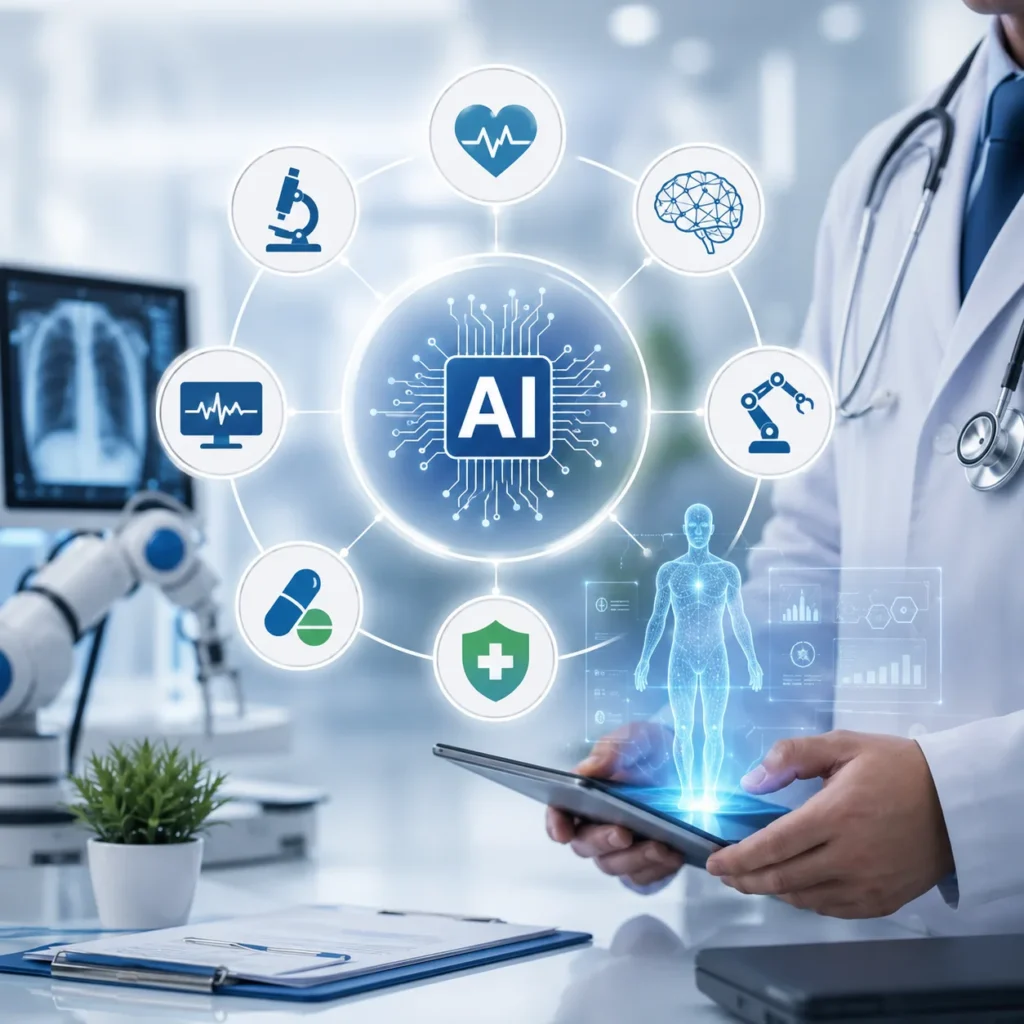
AI in Healthcare: Benefits, Applications, Challenges & Future Trends (2026) Smarter Healthcare. Better Outcomes. Introduction Artificial Intelligence (AI) is rapidly transforming the healthcare industry by making medical services more accurate, efficient, and patient-centric. From assisting doctors in diagnosing diseases to automating hospital operations, AI is helping healthcare providers improve patient outcomes while reducing costs and administrative burdens. As healthcare organizations continue their digital transformation journey, AI has become an essential technology for delivering smarter care, optimizing workflows, and supporting data-driven decision-making. Whether it’s a hospital, diagnostic center, pharmaceutical company, or healthcare startup, AI is creating new opportunities to improve both clinical and operational performance. What is AI in Healthcare? AI in healthcare refers to the use of advanced technologies such as machine learning, natural language processing (NLP), computer vision, and predictive analytics to analyze medical data, identify patterns, and assist healthcare professionals in making informed decisions. Rather than replacing doctors, AI acts as a powerful support system by processing large volumes of data quickly and providing valuable insights that help improve diagnosis, treatment planning, and patient care. Benefits of AI in Healthcare 1. Faster and More Accurate Diagnosis AI can analyze medical images, laboratory reports, and patient records within seconds, helping doctors detect diseases earlier and with greater accuracy. Early diagnosis often leads to more effective treatment and improved patient outcomes. 2. Personalized Patient Care Every patient has unique healthcare needs. AI helps create personalized treatment plans by analyzing medical history, genetic information, and lifestyle factors, allowing healthcare providers to deliver more targeted care. 3. Improved Hospital Efficiency Hospitals use AI to automate routine administrative tasks such as appointment scheduling, billing, documentation, and resource allocation. This reduces manual work, minimizes errors, and allows healthcare professionals to spend more time with patients. 4. Predictive Analytics AI can identify patterns in healthcare data to predict potential health risks before they become serious. Predictive analytics supports preventive care, reduces hospital readmissions, and improves long-term patient management. 5. Better Patient Engagement AI-powered virtual assistants and chatbots provide patients with instant support by answering common questions, scheduling appointments, sending medication reminders, and improving communication between patients and healthcare providers. Applications of AI in Healthcare AI is being adopted across multiple healthcare functions, including: Medical Imaging and Radiology Disease Prediction and Early Detection Telemedicine and Virtual Consultations Drug Discovery and Clinical Research Electronic Health Records (EHR) Hospital Operations Management Healthcare Supply Chain Optimization Wearable Devices and Remote Patient Monitoring Healthcare Cybersecurity Clinical Decision Support Systems These applications help organizations improve efficiency, reduce operational costs, and enhance the quality of patient care. Challenges of AI in Healthcare While AI offers significant advantages, successful implementation requires careful planning and governance. Data Privacy and Security Healthcare organizations manage highly sensitive patient information. Protecting this data through strong cybersecurity practices and compliance with healthcare regulations is essential. Integration with Existing Systems Many healthcare providers still rely on legacy systems that may not easily integrate with modern AI solutions. A well-planned digital transformation strategy helps ensure smoother implementation. Data Quality AI systems depend on accurate and reliable data. Incomplete or inconsistent records can affect the quality of AI-generated insights and recommendations. Workforce Adoption Healthcare professionals need proper training to effectively use AI-powered tools. Building trust and encouraging collaboration between technology and clinical teams are key to successful adoption. Ethical Considerations AI should always support healthcare professionals rather than replace human judgment. Responsible AI use requires transparency, fairness, and ongoing human oversight. Future Trends of AI in Healthcare The healthcare industry will continue to see rapid AI innovation in the coming years. Generative AI Generative AI is helping healthcare professionals automate documentation, summarize clinical information, support medical research, and improve patient communication. Smart Hospitals Hospitals are integrating AI with IoT devices, cloud platforms, and real-time analytics to create connected healthcare environments that improve operational efficiency and patient experiences. Precision Medicine AI enables more personalized treatments by analyzing genetic information, lifestyle factors, and clinical data to recommend therapies tailored to individual patients. Remote Patient Monitoring AI-powered wearable devices allow healthcare providers to monitor patients remotely, helping detect potential health issues early and reducing unnecessary hospital visits. AI-Assisted Robotics Advanced robotic systems supported by AI are enhancing surgical precision, improving recovery times, and assisting healthcare professionals in complex medical procedures. How Jisoteix Helps Healthcare Organizations At Jisoteix, we help healthcare organizations embrace digital transformation through innovative technology solutions designed to improve operational efficiency and patient care. Our healthcare technology expertise includes: AI & Intelligent Automation Healthcare Digital Transformation Cloud Migration & Infrastructure Data Analytics & Business Intelligence ERP & Enterprise Solutions Cybersecurity Services Custom Healthcare Software Development IT Consulting & Managed Services We work with hospitals, clinics, diagnostic centers, and healthcare businesses to build secure, scalable, and future-ready digital ecosystems. Conclusion Artificial Intelligence is reshaping healthcare by improving diagnosis, enhancing patient experiences, streamlining operations, and supporting smarter clinical decisions. As AI technologies continue to evolve, healthcare organizations that invest in responsible and strategic AI adoption will be better positioned to deliver high-quality care, improve operational performance, and remain competitive in the digital era. The future of healthcare is intelligent, connected, and data-driven—and AI will continue to play a central role in that transformation.
How Digital Transformation is Reshaping Retail Businesses
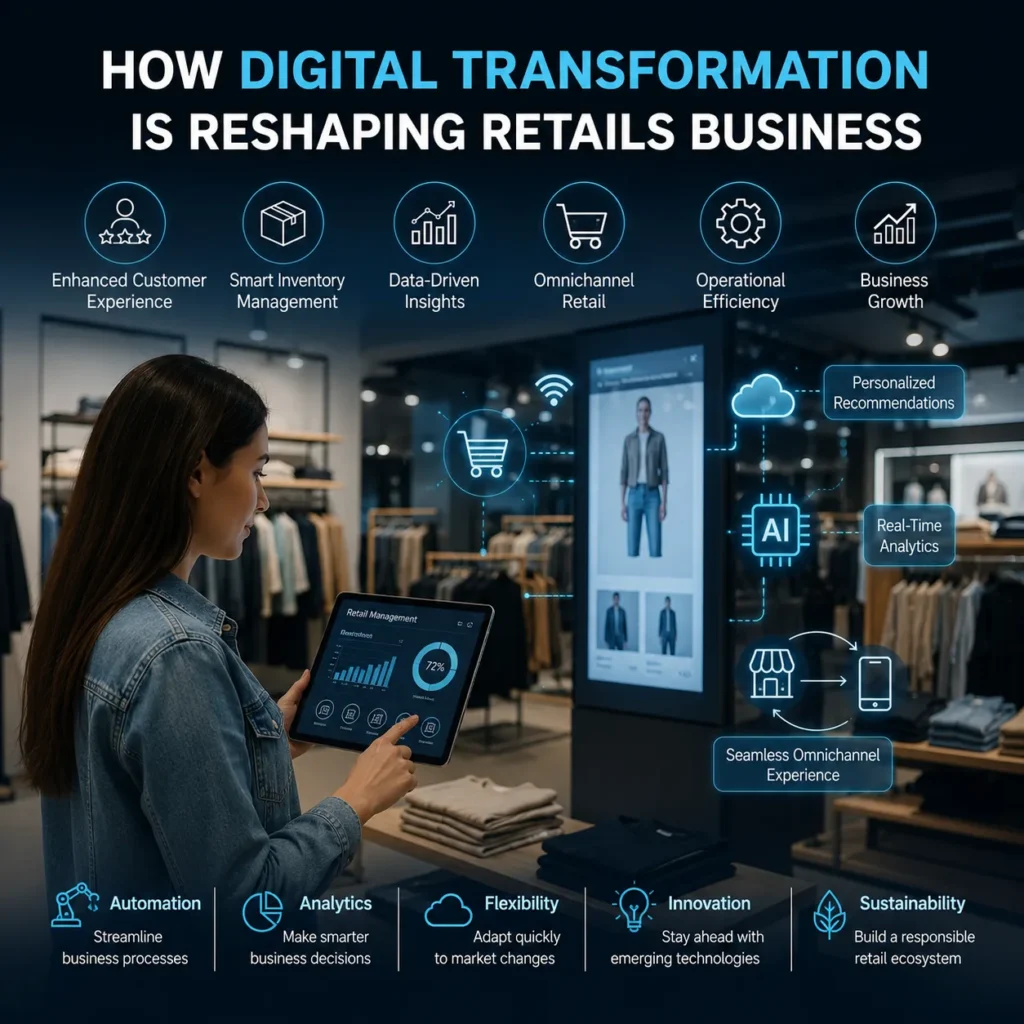
How Digital Transformation is Reshaping Retail Businesses Digital Transformation in Retail: Driving the Future of Customer Experience The retail industry has undergone a remarkable evolution over the past decade. Today’s customers expect convenience, speed, personalized experiences, and seamless shopping across online and offline channels. To meet these expectations, businesses are embracing digital transformation—using modern technologies to improve operations, enhance customer engagement, and create sustainable business growth. Whether you’re a small retailer, an eCommerce brand, or a large retail chain, digital transformation is no longer optional. It has become a strategic necessity for staying competitive in an increasingly digital marketplace. What is Digital Transformation in Retail? Digital transformation in retail refers to the integration of digital technologies into every aspect of a retail business. It involves replacing traditional, manual processes with smart, data-driven solutions that improve efficiency, customer satisfaction, and profitability. From AI-powered customer support to cloud-based inventory management and advanced analytics, digital transformation enables retailers to make faster decisions and deliver better shopping experiences. Why Digital Transformation Matters Consumer behavior has changed significantly. Customers now expect: Fast and secure online shopping Personalized product recommendations Real-time inventory availability Multiple payment options Quick deliveries and easy returns Consistent experiences across websites, mobile apps, and physical stores Retail businesses that invest in digital transformation are better equipped to meet these expectations while improving operational efficiency and reducing costs. Key Benefits of Digital Transformation in Retail 1. Enhanced Customer Experience Modern technology enables retailers to provide personalized shopping experiences through customer data, AI recommendations, and targeted promotions, increasing customer satisfaction and loyalty. 2. Smarter Inventory Management Digital inventory systems provide real-time stock visibility, helping businesses reduce overstocking, avoid stock shortages, and improve order fulfillment. 3. Data-Driven Business Decisions Retail analytics help businesses understand customer behavior, monitor sales trends, forecast demand, and make informed strategic decisions. 4. Omnichannel Shopping Experience Customers can seamlessly browse products online, purchase through mobile devices, and collect orders in-store, creating a unified shopping journey. 5. Improved Operational Efficiency Automation reduces repetitive manual tasks such as inventory updates, invoicing, reporting, and order processing, allowing employees to focus on customer service and business growth. 6. Increased Business Scalability Cloud-based retail platforms allow businesses to expand to new locations, launch new products, and manage growing customer demand without significant infrastructure investments. Technologies Transforming the Retail Industry Successful retailers are adopting technologies such as: Artificial Intelligence (AI) Cloud Computing Internet of Things (IoT) Big Data Analytics Customer Relationship Management (CRM) Enterprise Resource Planning (ERP) Mobile Commerce (M-Commerce) Contactless Payment Systems Warehouse Automation Digital Supply Chain Management These technologies improve productivity while creating more engaging customer experiences. Common Challenges Retail Businesses Face Although digital transformation offers numerous advantages, businesses often encounter challenges, including: Legacy systems that limit innovation Data security and privacy concerns High implementation costs Resistance to organizational change Integration of multiple digital platforms Employee skill gaps Managing large volumes of customer data Addressing these challenges requires careful planning, expert guidance, and scalable technology solutions. Best Practices for Successful Digital Transformation Retail businesses can maximize success by following these best practices: Develop a clear digital transformation strategy. Focus on customer-centric innovation. Invest in scalable cloud technologies. Use data analytics for decision-making. Automate repetitive business processes. Strengthen cybersecurity measures. Train employees on digital tools. Continuously monitor performance and optimize operations. Future Trends in Retail Digital Transformation The future of retail will be shaped by technologies such as: AI-powered shopping assistants Predictive analytics Smart stores Augmented Reality (AR) shopping experiences Voice commerce Sustainable retail technologies Blockchain-enabled supply chains Hyper-personalized customer experiences Retailers that embrace these innovations will gain a significant competitive advantage. Business Impact Digital transformation enables retailers to: Improve operational efficiency Increase customer satisfaction Reduce operating costs Accelerate business growth Improve inventory accuracy Enhance employee productivity Increase revenue opportunities Build long-term customer loyalty Ultimately, digital transformation helps retailers become more agile, resilient, and prepared for future market changes. How Jisoteix Helps Retail Businesses At Jisoteix Technologies LLP, we help retail and eCommerce businesses embrace digital transformation with practical, scalable, and future-ready technology solutions. Our Expertise Retail Technology Consulting Digital Transformation Strategy Custom Retail Software Development eCommerce Website & Platform Development ERP & CRM Integration Inventory & Warehouse Management Solutions Business Process Automation AI & Data Analytics Solutions Cloud Migration & Infrastructure Cybersecurity & Data Protection Sustainable Digital Solutions Ongoing Technical Support & Optimization Why Choose Jisoteix? Tailored solutions designed for your business goals Scalable technologies that support long-term growth Industry-focused expertise in retail and eCommerce Secure, reliable, and high-performance digital solutions End-to-end implementation and continuous support Commitment to innovation, efficiency, and business success Whether you are modernizing an existing retail business or building a new digital commerce platform, Jisoteix partners with you to deliver technology that drives measurable results. Conclusion Digital transformation is redefining the retail industry by enabling smarter operations, better customer experiences, and sustainable business growth. Businesses that invest in modern technologies today will be better positioned to adapt to changing consumer expectations and future market demands. By partnering with Jisoteix, retailers gain access to innovative technology solutions, strategic expertise, and ongoing support that help transform challenges into opportunities for growth. How can Jisoteix support retail businesses? Jisoteix provides consulting, software development, automation, cloud solutions, ERP and CRM integration, analytics, cybersecurity, and digital transformation services tailored to retail and eCommerce businesses.
How AI is Transforming Business Operations & Automation | Jisoteix Insights
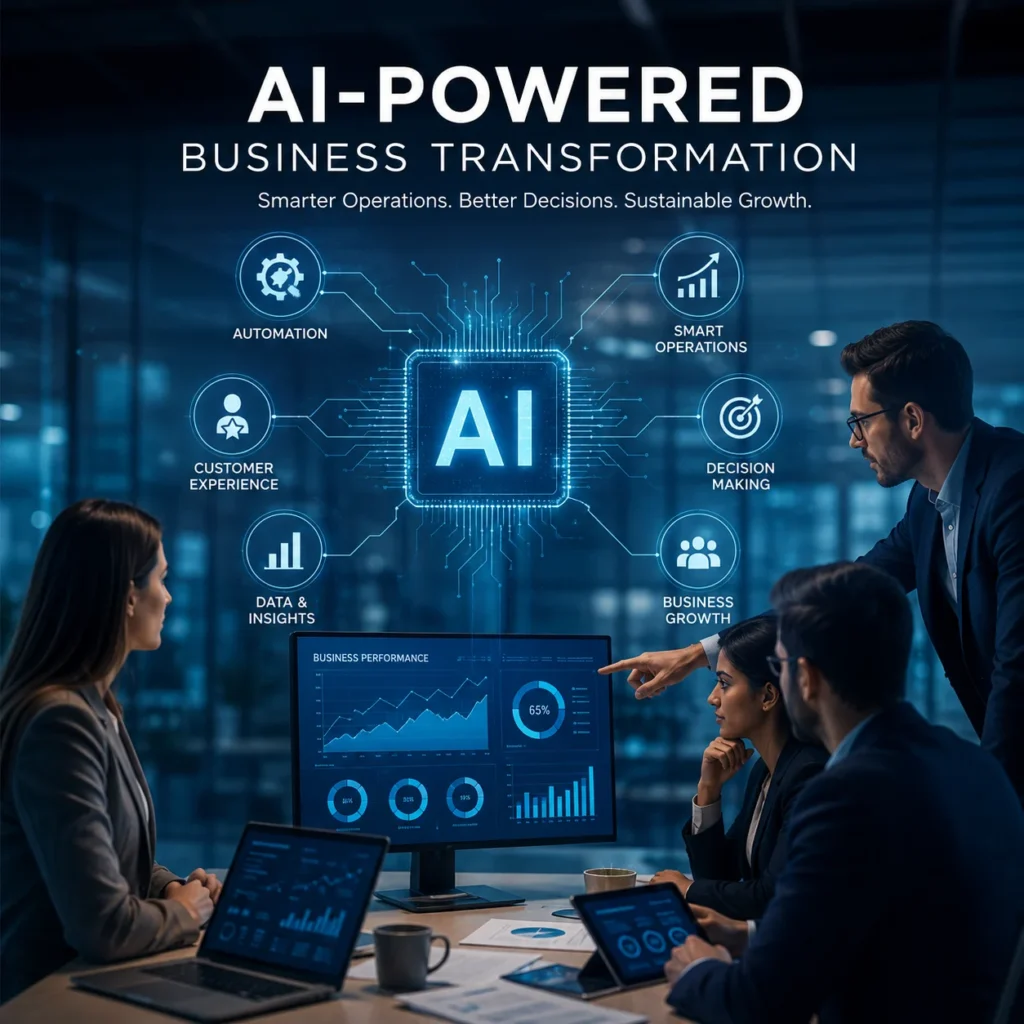
How AI is Transforming Business Operations & Automation | Jisoteix Insights Artificial Intelligence (AI) is reshaping the way businesses operate, compete, and grow in today’s digital economy. From automating repetitive tasks to improving customer interactions and enabling intelligent decision-making, AI has become a powerful driver of business transformation. Modern organizations are using AI to streamline operations, reduce costs, improve efficiency, and unlock new growth opportunities. AI systems can analyze massive volumes of data, identify patterns, predict outcomes, and support faster, more accurate decisions. AI in Business Operations & Automation AI helps businesses automate time-consuming and repetitive tasks such as: Data entry and processing Inventory management Workflow approvals Report generation Customer support operations This improves productivity, reduces human error, and allows teams to focus on higher-value strategic work. AI-powered automation also helps organizations optimize workflows, improve resource allocation, and increase operational efficiency across departments. AI in Customer Experience Customer expectations are evolving rapidly. Businesses must now deliver fast, personalized, and seamless experiences across digital channels. AI enables this through: Smart chatbots Virtual assistants Personalized recommendations Customer sentiment analysis Predictive support These technologies help improve engagement, satisfaction, and long-term customer loyalty. AI in Decision-Making AI empowers leaders with real-time intelligence and predictive insights. Businesses can use AI for: Demand forecasting Risk analysis Sales predictions Market trend analysis Strategic planning This enables faster, smarter, and more data-driven decisions. How Jisoteix Solves Business Challenges At Jisoteix Technologies LLP, we help businesses solve complex operational and digital challenges through innovative technology solutions. We address key business pain points such as: ✔ Manual and inefficient workflows✔ Slow digital transformation✔ Poor system integration✔ Limited automation✔ Ineffective customer engagement✔ Lack of actionable business insights Our expertise includes: AI & automation solutions Custom software development Web & enterprise technology solutions Digital transformation consulting Business process optimization Sustainable technology innovation We help organizations build intelligent, scalable, and future-ready systems that drive growth and long-term success. Explore our solutions:Jisoteix.com